
How to Check Criminal History in Alexander County
Start with the North Carolina Judicial Branch eCourts Portal when the main question is whether an Alexander County criminal case was filed and how each charge ended. Use a full name and known spelling variants, then narrow the location to Alexander County and the category to Criminal Actions. A date of birth can help distinguish people, but a name match alone does not prove identity. Search the hearing tool separately when an upcoming date is the point of the check. The clerk's public terminal and paper file remain the fallback for older documents, certified results, and items that the public Portal does not display.
A complete Alexander County criminal history check may require more than a case search. The Sheriff and Detention Center answer current booking and county custody questions. NCDAC covers state prison and community supervision. NCSBI's Right to Review is the route for a person to inspect their own fingerprint-supported state record. Follow this sequence:
- Search the name or case number in eCourts, then filter for Alexander County criminal actions.
- Open each case summary and read the disposition for every charge, not just the case status.
- Contact the Alexander County clerk when a document, older case, or certified search is needed.
- Ask the Sheriff about current jail custody, booking, bond, or release data that is not online.
- Use NCDAC for state custody or supervision and NCSBI for a fingerprint-based self-review.
Note: A recent arrest may appear in sheriff records before a prosecutor files an Alexander County court case.
Alexander Criminal Record Custodians Compared
Alexander County criminal records are split by the act each office performs. Police or deputies create incident and arrest reports. Detention staff create the booking entry. The Clerk of Superior Court preserves District and Superior Court files. NCSBI links eligible fingerprint-supported arrest cycles with court outcomes, while NCDAC records state imprisonment, probation, parole, and post-release supervision. Treating one source as a complete record can hide a key part of the trail.
| Channel | Best answer | Key limit |
|---|---|---|
| eCourts and clerk | Filed charges, hearings, outcomes, judgments | Not a live jail roster |
| Sheriff and detention | Arrest, booking, bond, current county custody | Initial charge is not the final result |
| NCSBI | One's own fingerprint-supported state history | No unrestricted public name portal |
| NCDAC | State prison and supervision history | Not the Alexander County jail |
The official courthouse page shows the building where Alexander County criminal case files are maintained.
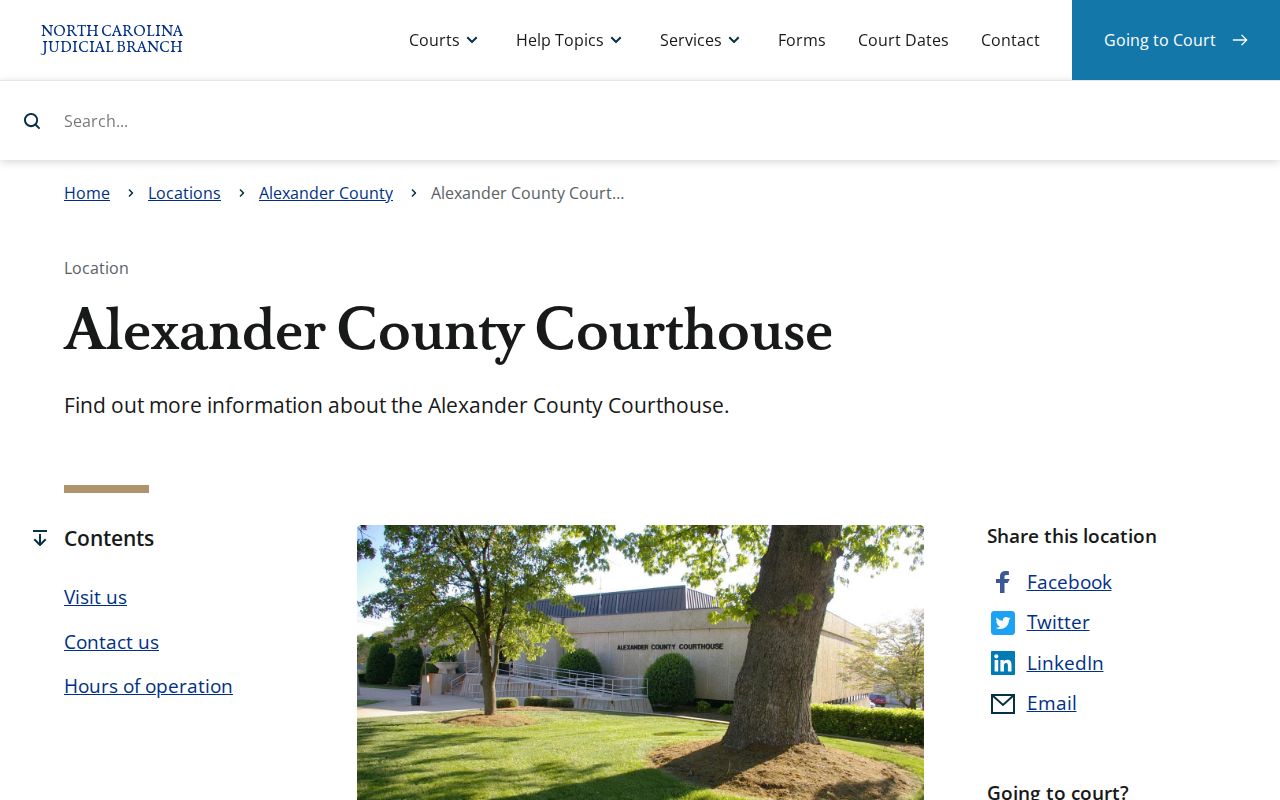
The courthouse is the source for court files, but sheriff and state records must still be checked through their own custodians.
Official North Carolina Background Checks
The North Carolina State Bureau of Investigation's Criminal Information and Identification Section keeps the central fingerprint-supported criminal history repository. It does not offer the public an unrestricted name search for another person. Its public self-review product uses the official Right to Review form. The subject mails a written request, identity details, legible fingerprints, and the required payment. The NCSBI background check FAQ explains the available check types and challenge route.
The NCSBI repository description explains the state reporting role.
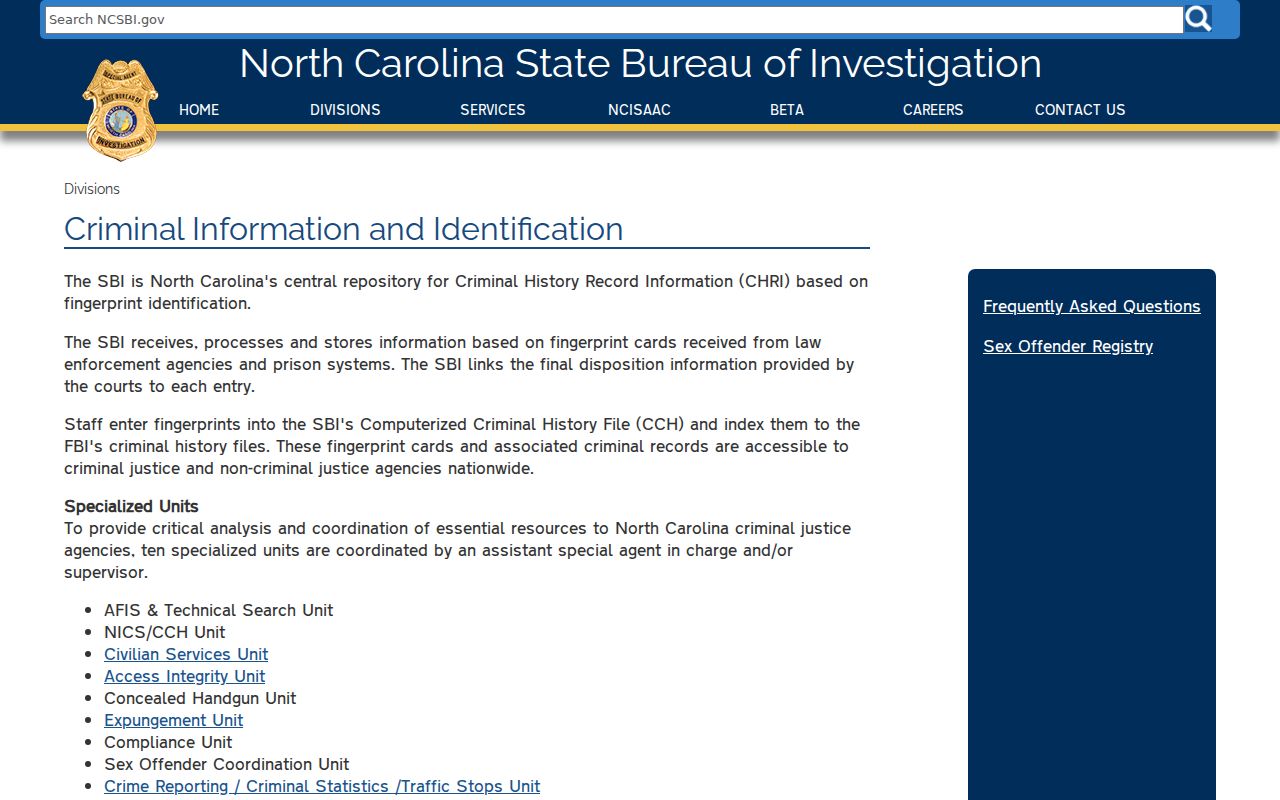
This state repository view differs from a free Alexander County eCourts name search. NCSBI's background checks on others page routes the public to court, correctional, and registry sources. For a certified court-index search, ask the clerk. A national fingerprint history belonging to the subject uses the FBI Identity History Summary.
Alexander eCourts Criminal Record Search
North Carolina completed statewide eCourts conversion in all counties in October 2025. Alexander County case summaries now run through Smart Search. Enter a party name or the four-part Enterprise Justice case number. Advanced filters can narrow a common name by location, case category, status, and date. The Search Hearings tool answers calendar questions, while NC Judgment Search focuses on judgment-index entries. Payment tools cover eligible court obligations, but a payment screen is not a substitute for the Register of Actions or charge-level disposition.
| Control | Use in an Alexander search | Search tip |
|---|---|---|
| Search | Party name or case number | Use an asterisk for an unknown spelling segment |
| Location | Alexander County | Leaving it open can return statewide matches |
| Case category | Criminal Actions | Separates criminal results from other public cases |
| Status and date | Active, disposed, or time range | Useful for common names and repeat cases |
| Search Hearings | Upcoming court date | Confirm changes with the clerk |
Portal data is near real time, yet access levels vary. A docket event can be visible while the underlying document still requires courthouse inspection.
Types of Criminal Records
An Alexander County incident report describes what an agency was told or observed. An arrest record documents custody and the alleged violation. Booking adds intake time, identifiers, initial charges, bond, holds, and release status. None of those establishes a conviction. The criminal court file shows what prosecutors filed and what the judge or jury did with each count. A rap sheet joins qualifying fingerprint-supported arrest cycles to reported dispositions. These products overlap, but they do not have the same source or legal meaning.
- District Court files: misdemeanors, infractions, and early felony proceedings in Alexander County.
- Superior Court files: felony pleas and trials, sentencing, and misdemeanor appeals for a new trial.
- Warrant records: court and law-enforcement process that may be limited before service or execution.
- Correctional records: county jail custody at the Bebber Center or state custody and supervision through NCDAC.
- Registry records: public entries under North Carolina's sex-offender registration law, not a general criminal history list.
The full court outcome matters. A dismissed charge can exist beside a conviction in the same Alexander County case, and a case dismissal does not by itself delete a separate police or booking record.
Alexander Criminal Record Check Fees
Cost depends on the product, not the county name alone. eCourts public summaries are free and uncertified. NCSBI charges for each Right to Review copy, and the request must include fingerprints. The FBI charges separately for its national subject-only identity history. NCSBI and Judicial Branch materials state a fee for a clerk criminal background search. Paper copies, certified documents, local fingerprint rolling, and some expunction petitions can add other costs, so confirm the current amount before sending payment.
| Record product | Published amount | Access method |
|---|---|---|
| eCourts public summary | Free | Online, not certified |
| NCSBI Right to Review | $14 per copy | Subject fingerprints and mail request |
| FBI Identity History Summary | $18 FBI fee | Subject fingerprints |
| Clerk criminal background search | $25 | County or statewide court index request |
The NCSBI self-review page sets out the state choices and current instructions.
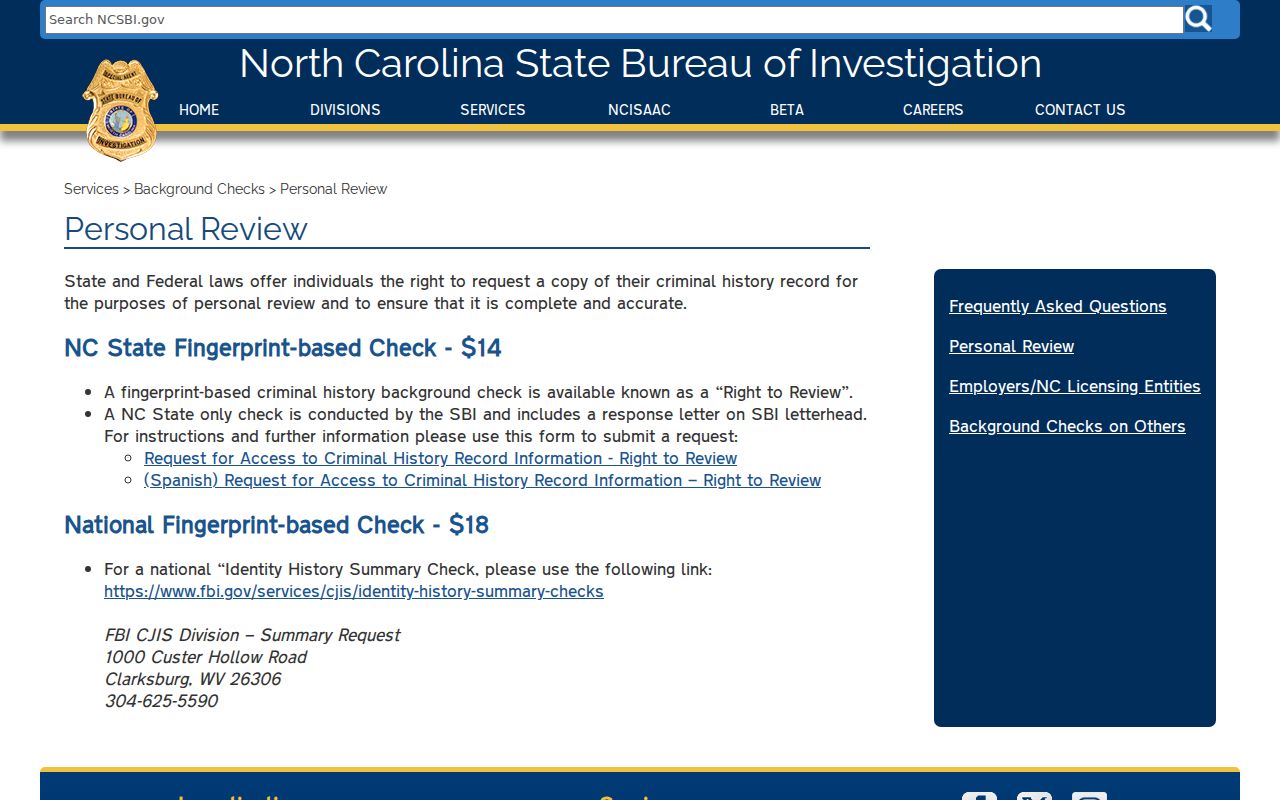
The official form should be checked again before mailing because fees, addresses, and identity requirements can change.
What an Alexander County Criminal Record Shows
A record's fields reveal which stage it describes. Repository history emphasizes identity and fingerprint-linked cycles. The court file emphasizes prosecution and outcome. Booking emphasizes custody. Read labels in that context, and never assume that an early charge remained unchanged through judgment.
| Name & Identifiers | Names, aliases, birth details, and state or federal identifiers where lawfully public. |
|---|---|
| Arrest / Booking Data | Agency, intake date, initial charges, bond or hold, and release status. |
| Charges & Statutes | Offense description, statutory citation, class, offense date, and charge number. |
| Disposition | Outcome for each count, such as guilty, dismissed, not guilty, or no further prosecution. |
| Sentence | Confinement, probation, costs, restitution, fees, and other conditions in the judgment. |
| Custody / Supervision | County detention, state prison, probation, parole, or post-release status where publicly shown. |
Missing fields do not always mean nothing happened. Delayed reporting, omitted fingerprints, protected data, spelling variations, and later expunction processing can make two Alexander County sources disagree.
Alexander Jail and Prison Records
The Thomas E. Bebber Sr. Alexander County Law Enforcement Center holds the Sheriff and Detention Center. The complex opened in 2012, has space for 164 people, and includes a secure vehicle entry, booking and medical areas, separate housing pods, surveillance rooms, and video visitation. No functioning official web roster was located during research. Call the Sheriff or detention staff for present booking, bond, release, and custody facts rather than using a third-party jail page.
Alexander Correctional Institution is a state prison located in the county, not an annex of the county jail. Search its sentenced state prisoners through NCDAC Public Offender Search. That portal also covers some probation, parole, and post-release information. A person may appear in NCDAC history without being held at the Bebber Center, and a current county detainee may not appear in the state locator.
Alexander County Detention
91 Commercial Park Avenue, Taylorsville, NC 28681
828-632-1111
Alexander County Clerk
29 W. Main Avenue, Taylorsville, NC 28681
828-635-3113
Public Access Laws
North Carolina law starts with open access but sets record-specific limits. The North Carolina Public Records Law requires reasonable inspection and copies of public material. Criminal-investigation files are not automatically open, though named arrest and incident facts must be released. Court records remain open under clerk supervision unless another law closes them. Juvenile records, protected personal data, sealed process, victim details, and law-enforcement recordings follow narrower rules.
Key North Carolina laws:
G.S. Chapter 132 requires access to public records while preserving statutory exceptions.
G.S. 132-1.4 separates releasable arrest facts from protected investigation material.
G.S. 7A-109 opens court records to inspection under the clerk's supervision and permits remote access.
G.S. Chapter 15A, Article 5 governs expunction eligibility, petitions, effects, and confidential retention.
Ask the correct Alexander County custodian to separate the public portion of a mixed file. An agency need not create a new analysis simply because the underlying records are public.
Alexander Criminal Record Terms
North Carolina docket words can change how an Alexander County record should be read. Focus on the result for each charge and the most recent court event. These terms appear often in court, bond, and supervision entries:
- Disposition
- The final outcome of one charge, such as guilty, dismissed, or not guilty.
- Order for arrest
- North Carolina process authorizing custody, often after failure to appear or comply.
- Secured bond
- A release condition requiring cash, security, or a surety to satisfy the set amount.
- Indictment
- A grand jury's formal felony accusation after it returns a true bill.
- Expunction
- Statutory removal of a qualifying record from ordinary public access after required processing.
A plea or finding of guilt is not the same as the sentence. Likewise, a court dismissal does not mean the law-enforcement record has already been removed. Read the Alexander County case summary through its final judgment and later events.
Sealed, Expunged & Restricted
Juvenile counselor and court records, sealed warrants, victim and minor identifiers, financial account data, investigative evidence, and most law-enforcement recordings are outside ordinary public access. Expunged cases should leave public indexes after the clerk and other agencies process the order, but North Carolina keeps a confidential record for limited uses allowed by law. Expunction therefore does not mean every government trace is physically destroyed.
Eligibility is tied to the exact Article 5 provision. Dismissals and acquittals follow different rules from conviction-based petitions. Offense class, prior record, waiting periods, pending charges, violence, impaired-driving rules, victim age, and registry status can control. Retrieve every Alexander County case number and certified disposition before choosing a petition form. The Judicial Branch expunction resource provides current forms and routing.
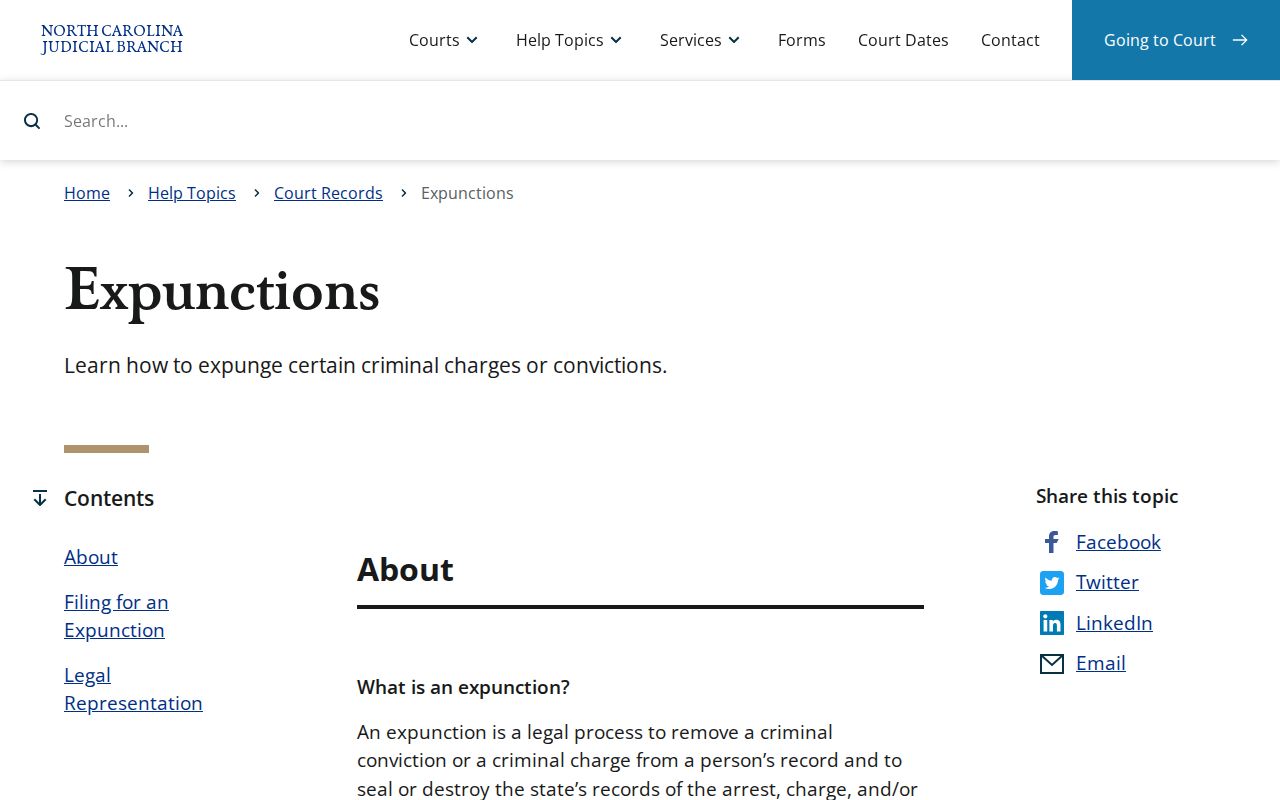
After an order, recheck eCourts and obtain a new NCSBI Right to Review. Dispute stale data with the office that still reports it.
Alexander Federal Criminal Records
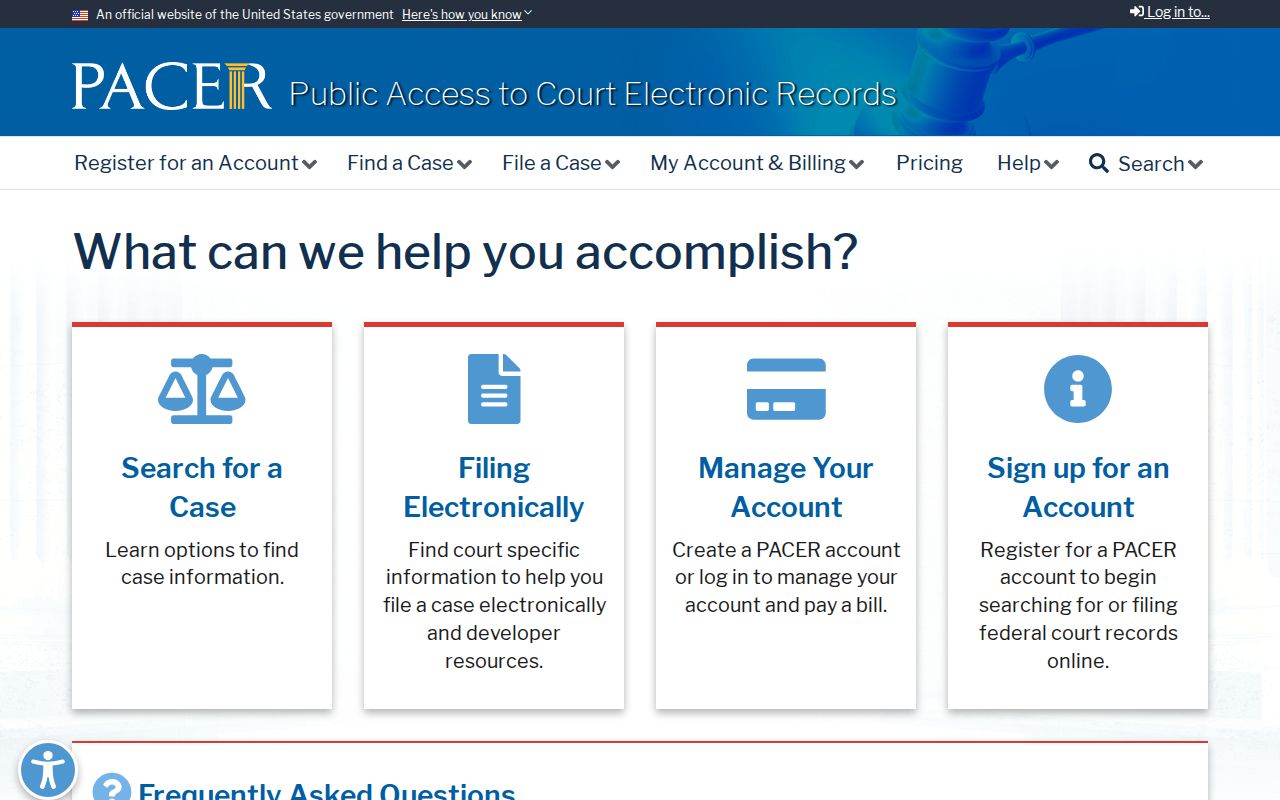
Federal criminal cases from Alexander County belong to the U.S. District Court for the Western District of North Carolina. They do not appear as federal dockets in North Carolina eCourts. PACER Case Locator searches federal courts by party, court, case number, and filing data. PACER generally charges by page, with a document cap and a quarterly waiver threshold under its published schedule. The district clerk and PACER remain the official sources even when a free copy also appears in a public archive.
The PACER search service supplies the official federal access route.
Federal custody has its own split. The Bureau of Prisons Inmate Locator covers federal prisoners, while Alexander Correctional Institution belongs to North Carolina and is searched through NCDAC. An FBI Identity History Summary is the subject's fingerprint history, not a federal court docket search.
Criminal Records by City in Alexander County
Taylorsville is Alexander County's seat and only incorporated municipality. Its Police Department creates town incident and arrest reports, while the Sheriff is the main law-enforcement custodian outside town. There is no separate Taylorsville municipal criminal court. Town citations and criminal charges enter Alexander District Court, and all county bookings flow through the Sheriff and Bebber Center. This structure makes the city guide useful without inventing separate court or jail systems.
Taylorsville Criminal History
2020 population 2,183 · Town police records route to the Police Department, while criminal cases use Alexander County courts.
The town Police Department works from Town Hall at 67 Main Avenue Drive. Report copies have no published local web portal or dedicated fee schedule, so call the town office and identify the agency report number, date, location, and record sought.
Alexander Criminal Records Since 1865
Alexander County's record trail has a hard historic boundary. The original Taylorsville grid formed around the courthouse square after the county's creation in 1847. Town-lot auction proceeds helped pay for an early courthouse and jail. During the Civil War, troops under Stoneman destroyed courthouse records in 1865. A modern clerk search cannot recover criminal case material that no longer exists, which matters for genealogy and other nineteenth-century research.
Today's records are also divided by place. Court adjudication occurs through the courthouse and statewide eCourts system. Arrest, detention, and release records are tied to the Law Enforcement Center on Commercial Park Avenue. State-prison records from Alexander Correctional Institution belong to NCDAC. That physical split mirrors the legal split among records. When an Alexander County criminal record seems absent, first decide whether it was destroyed, restricted, never filed, held by another custodian, or indexed under a different name.