
Criminal Cases in the Alexander County Courts
Alexander County criminal court cases share one local custodian but move through two trial divisions. Alexander District Court handles misdemeanors, infractions, first appearances, and early felony proceedings. An indicted felony moves to Alexander Superior Court for pleas, trial, and sentencing. A District Court misdemeanor conviction may also reach Superior Court through an appeal for a new trial. Both divisions sit within Court District 32, and the Clerk of Superior Court preserves the files for each.
The official Alexander County Courthouse is at 29 W. Main Avenue in Taylorsville. The clerk can be reached at 828-635-3113, and the courthouse is open Monday through Friday from 8:00 a.m. to 5:00 p.m. Taylorsville has no separate municipal court. A town citation or criminal charge therefore belongs in the Alexander County District Court system, not a city docket.
Alexander Criminal Case Smart Search
North Carolina completed its statewide Enterprise Justice rollout in October 2025. Alexander County criminal case summaries are now available through the eCourts Portal. Smart Search accepts a party name or case number, and Advanced Filtering Options can limit results to Criminal Actions and Alexander County. A broad name may return people from across North Carolina, so set the location before drawing conclusions.
The Judicial Branch publishes eCourts Portal training and search tips. Its illustrated search instructions show how Smart Search, hearing search, and case-number tools fit together.
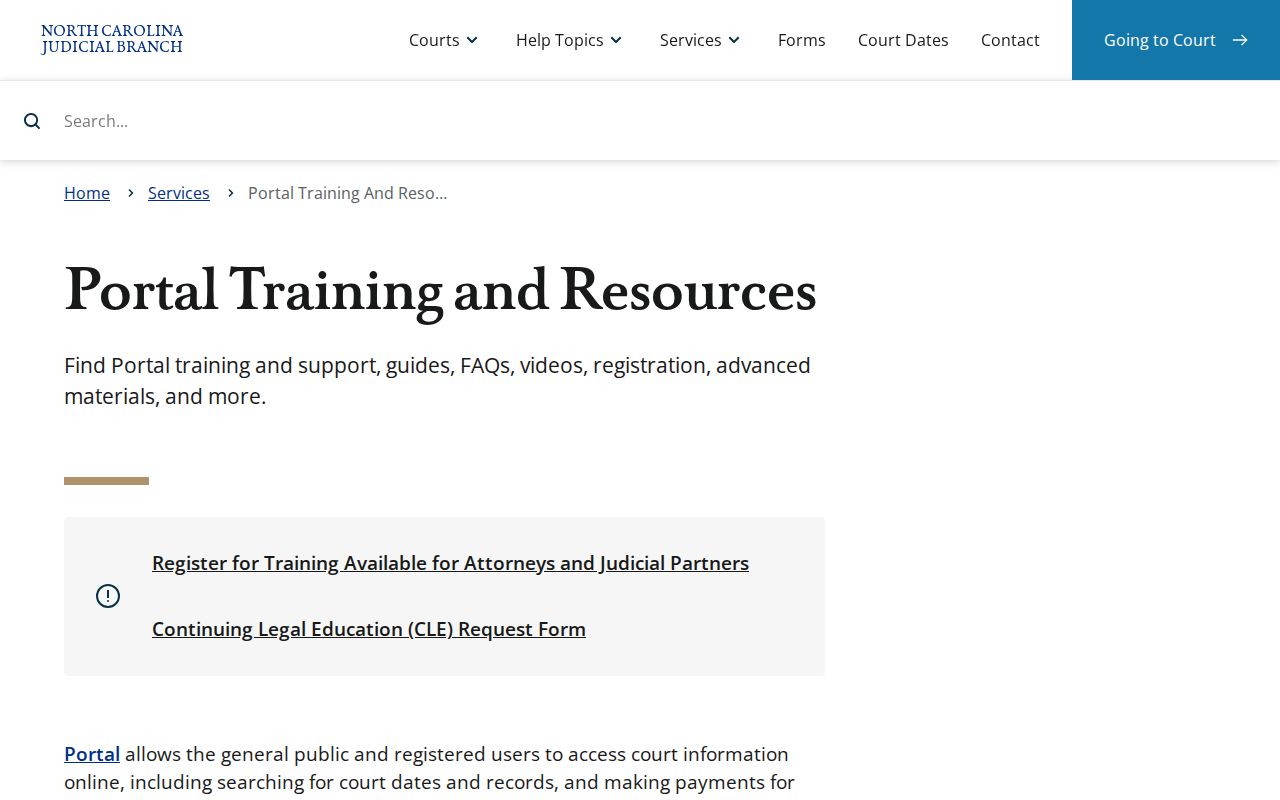
For a partial case number, enter at least four characters followed by an asterisk. A wildcard name search needs at least three last-name characters plus an asterisk and one first-name character plus an asterisk. Those rules help separate an Alexander County criminal case from a similar name elsewhere.
How to Search Case Records
Use more than one route when an Alexander County criminal court case matters. The Portal gives a free public summary, Search Hearings answers calendar questions, and the courthouse terminal reaches the approved public index. The clerk supplies paper files, copies, certified results, and the Judicial Branch's countywide or statewide criminal background search. The published fee is $25.
- Open Smart Search and select Criminal Actions plus Alexander County under the filters.
- Search the full party name or the Enterprise Justice case number, then narrow by status or file dates.
- Open the case summary and Register of Actions. Review each charge instead of reading only the overall case status.
- Check Search Hearings for an upcoming date and confirm the schedule with the Alexander County clerk because calendars can change.
- Use the public terminal or ask the clerk for the paper file, copies, certification, or an official background search when the online view is not enough.
| Field or Control | Type | Required | Use |
|---|---|---|---|
| Search | Text | Yes | Party name or case number; wildcards are allowed |
| Advanced Filtering Options | Expandable filter | No | Select Criminal Actions |
| Location | Dropdown | No | Choose Alexander County for local criminal cases |
| Case status | Filter | No | Narrow active or disposed results where offered |
| File or date range | Date filters | No | Reduce broad common-name results |
| Search Hearings | Portal tool | No | Find dates by name, citation number, and county |
Note: A name match is not proof of identity, so compare several public case details before treating a result as the correct person.
Missing Alexander Court Case Documents
A docket line can appear even when the linked document is not available online. Public access levels vary, and older or protected material may require clerk review. Start with the Judicial Branch court-record instructions, then take the complete case number to the courthouse terminal or counter. Ask to inspect the paper file and identify the exact pleading, order, judgment, or certification needed.
The state access instructions illustrate the terminal, paper-file, copy, and online channels for an Alexander County criminal court record.
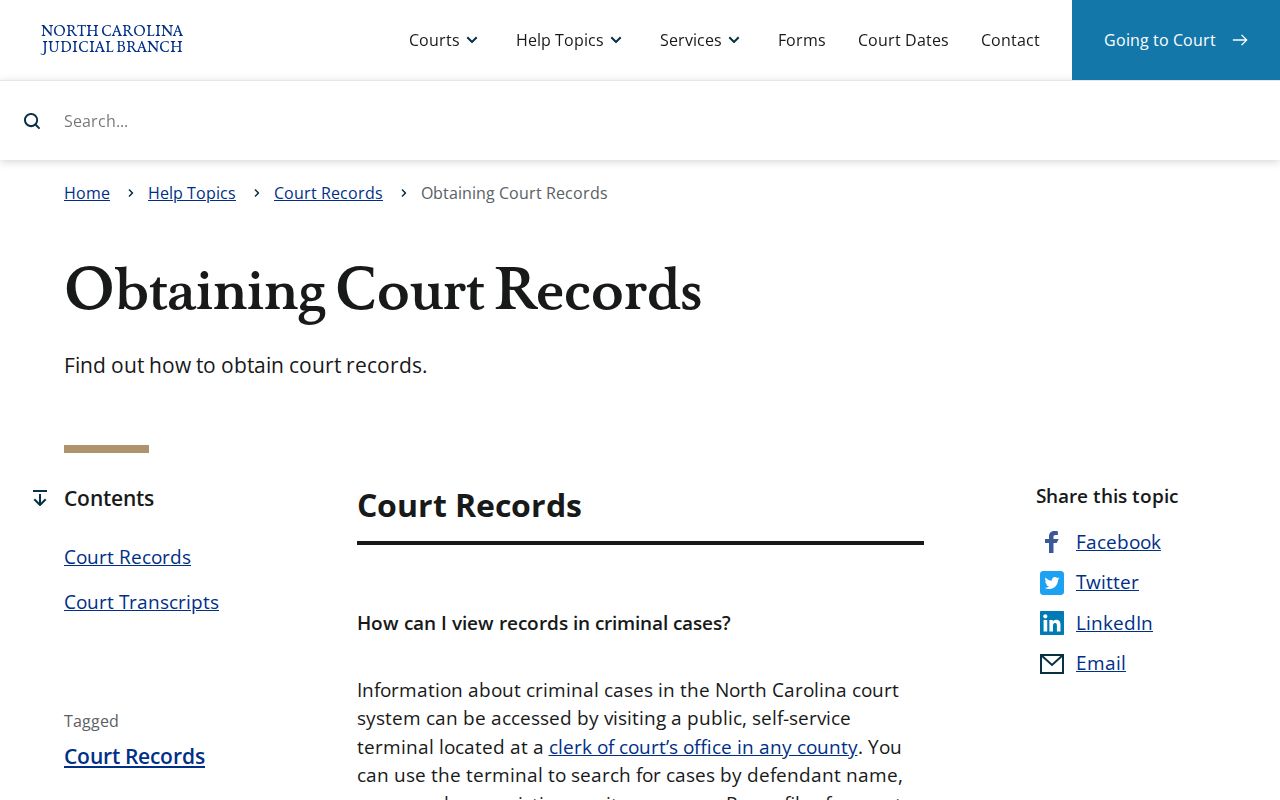
For a mailed request, include the case number, party or caption, requested documents, whether certification is needed, return contact details, and a request for the current cost. The research did not locate a published Alexander County per-page or certification amount, so confirm the total with the clerk before sending payment.
What the Case File Shows
An Alexander County criminal case file describes what prosecutors filed and what the court did. It may cover a matter that never produced a fingerprinted state repository cycle. Conversely, a booking entry focuses on custody and initial allegations. Reading the judicial file is the sound route for the filed offense, plea, disposition, judgment, and sentence.
| Case Number and Court | Enterprise Justice identifier, county, location, division, case type, file date, and status |
|---|---|
| Parties and Counsel | Public parties, attorneys, and judicial officer where approved for public access |
| Charges | Charge number, offense description, statute, class, offense date, and available tracking identifiers |
| Docket Events | Register of Actions dates, descriptions, hearings, locations, and event types |
| Disposition and Judgment | Plea, verdict, charge-level outcome, judgment, and sentence |
| Financial Entries | Costs, restitution, attorney fees, supervision fees, and payment balance where public |
Documents and fields can be withheld when law closes them. Confidential juvenile matters, sealed or expunged cases, victim information, personal identifiers, and protected filings do not become public merely because another docket event is visible.
Alexander Criminal Courts by Role
The Alexander County contact path changes with the question. The clerk is the file custodian. Magistrates handle initial process and release conditions. District Court judges hear misdemeanors and early felony matters, while Superior Court judges handle felony trials and sentencing after indictment. Prosecutorial District 32 serves Alexander and Iredell counties through the district attorney.
| Office | Alexander County criminal case role | Phone |
|---|---|---|
| Clerk of Superior Court | District and Superior files, copies, certifications, court searches | 828-635-3113 |
| Magistrates | Initial process and release conditions | 828-635-3119 |
| District Court judges | Misdemeanors and early felony proceedings | 704-832-6612 |
| Superior Court judges | Felony trials, pleas, sentencing, misdemeanor appeals | 704-832-6616 |
| District Attorney | Charging and prosecution in Prosecutorial District 32 | 704-832-6610 |
The official Alexander County court directory keeps these lines together for callers.
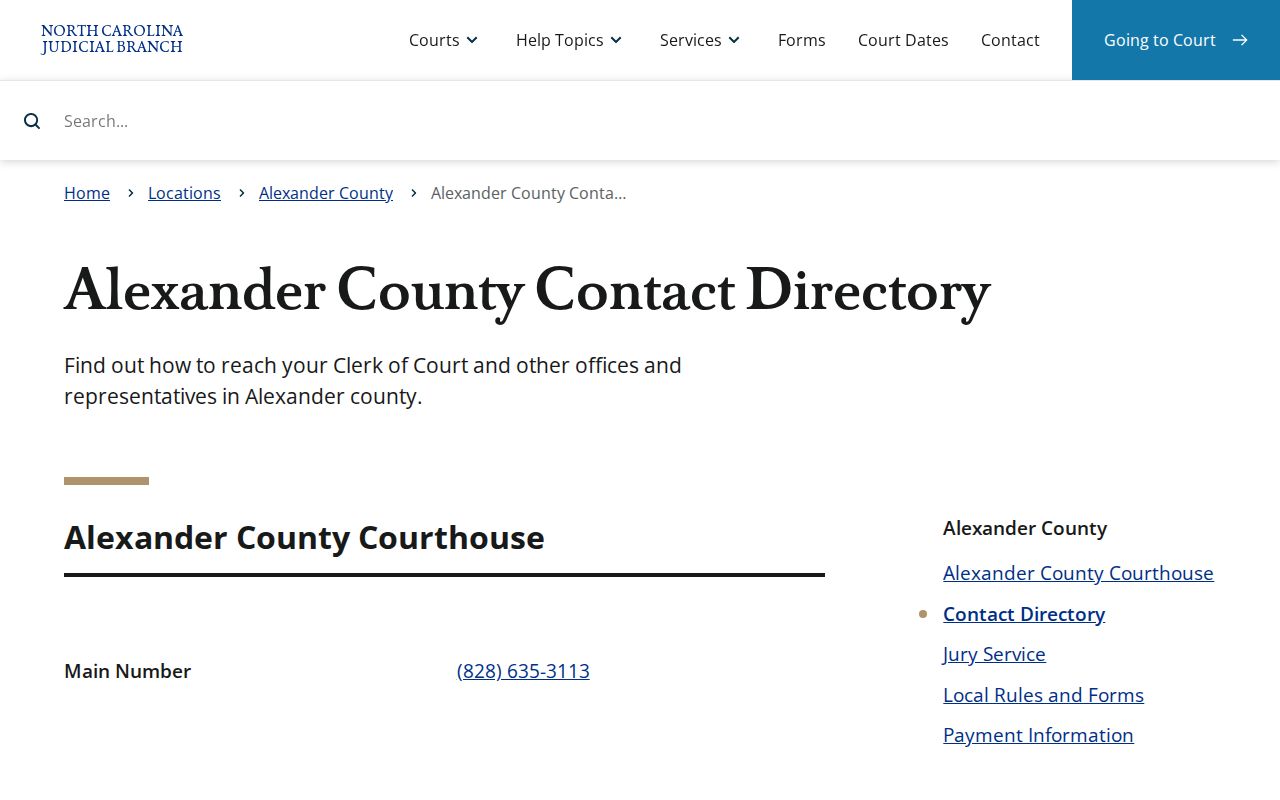
The directory helps readers call the office that controls the requested Alexander County criminal case information instead of sending a broad request to county administration.
Stages of a Criminal Case
An arrest, citation, or criminal summons starts the public trail. A magistrate handles initial process and release terms. Alexander District Court then handles a misdemeanor or the first stages of a felony. The prosecutor can dismiss a count, negotiate a plea, or seek a grand jury indictment. An indicted felony proceeds in Alexander Superior Court through arraignment, pretrial motions, a plea or trial, judgment, and sentence. North Carolina's Structured Sentencing classification law helps identify the offense class shown in the case file.
Alexander County case flow: Charges Filed → Arraignment → Pretrial → Plea or Trial → Disposition → Sentencing
Later docket events may include an appeal, probation violation, order for arrest, payment, modification, or expunction. The charge listed at arrest can differ from the charge filed by the prosecutor, the offense approved in an indictment, or the final conviction. The Alexander County arrest history supplies the earlier custody context, but the court case file controls the judicial outcome.
Alexander Case Status Versus Disposition
Case status describes the condition of the whole Alexander County criminal case. Disposition gives the outcome of one charge. A case can show as disposed while different counts ended in different ways. One count might be dismissed, another might carry a guilty plea, and a third might receive a not-guilty verdict. Read every charge row before describing the result.
A few terms make the register easier to read:
- Disposition
- The final result of a specific charge, such as guilty, dismissed, or not guilty.
- Nolle prosequi
- The prosecutor formally declines to proceed on that charge at that time.
- Indictment
- A grand jury's formal felony accusation, also called a true bill when approved.
- Order for arrest
- North Carolina court process authorizing custody, often after a failure to appear.
- Expunction
- Statutory removal of a qualifying record from ordinary public access.
A dismissal does not by itself erase every public trace. North Carolina expunction follows a separate statutory process, and eligibility depends on the exact outcome and current law.
Note: Confirm an unclear code or mixed result with the Alexander County clerk before relying on a one-line Portal label.
Access & Restrictions
G.S. 7A-109 generally opens court records to inspection under clerk supervision and authorizes remote access. The broader North Carolina Public Records Law also favors access, subject to exceptions. Court requests still belong with the Judicial Branch and clerk, not with the county manager's public-record form.
Alexander County criminal court access does not include sealed, expunged, confidential juvenile, protected victim, or private identifying data. Online redactions can differ from the paper file's public portion. If no Portal result appears, check spelling and wildcards, remove a narrow filter, search the full case number, and then call the clerk. A missing screen result is not proof that a matter never existed.
Alexander Criminal Case Payments
Payment records can be part of an Alexander County criminal case summary, but a balance is not the same as the full judgment. The local Alexander County payment instructions separate mail, counter, and eligible online options, while the statewide court-cost reference explains current fee categories. Mail payments accept a money order or certified check, not cash or a personal check. The counter accepts cash, money orders, certified checks, and cards with a processing fee. Eligible online payments use major cards and also add processing fees.
The Judicial Branch payment page shows how Alexander County court payments are routed.
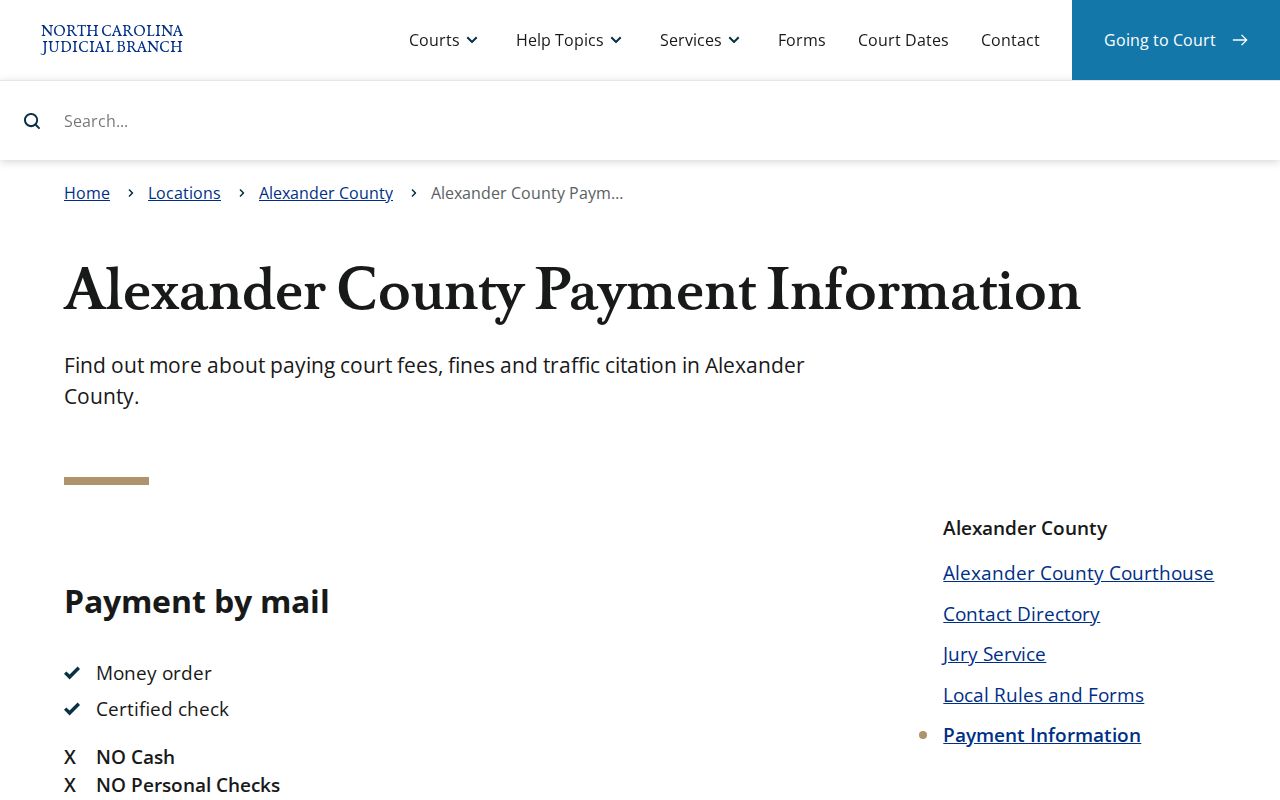
Match the payment to the correct case number and verify the balance in Portal or with the clerk. Costs, restitution, attorney fees, and supervision fees may appear as distinct entries, so paying one line may not resolve every obligation in the Alexander County criminal court file.